
Search is currently unavailable. To use search functionality, please accept cookies in your preferences.
Failed to load content. Please try again.
7 Amazing Wildflower Hikes to Have on Your Radar
Here's a roundup of some incredible wildflower hikes, including when to go, what flowers to look out for, and other tips for making the most of spring wildflower hiking.
10 min read
Ry Glover
Mar 13, 2024
As winter wanes and the days get longer, America's landscapes undergo a remarkable—often colorful—transformation. Fields, forests, and mountain slopes, once muted and dormant, burst into life. In less flowery language: spring means wildflower season.
From the high deserts of California to the high meadows of Colorado, timing is everything. Whether it's the golden poppies carpeting the Antelope Valley or the kaleidoscope of avalanche lilies adorning Mount Rainier, these trails aren’t just paths but portals into nature's most ephemeral art show. Here's a roundup of some incredible wildflower hikes, including when to go, what flowers to look out for, and other tips for making the most of spring wildflower hiking.
1. Mount Rainier National Park, WA: Skyline Trail Loop
When to Go: Late July to August
Floral Highlights: Lupines, paintbrushes, avalanche lilies
Covering 5.5 miles, the Skyline Trail Loop(Opens in a new window) gives hikers the full spectrum of Mount Rainier's alpine flora. The trail, both easy to navigate and with a manageable 1,400-feet in elevation, snakes through vibrant meadows and past striking overlooks, all under the shadow of Rainier's snowy peak. Depending on snowmelt you may find carpets of avalanche lilies, paintbrushes, or lupine. As the path ascends, each turn unveils new panoramas and floral compositions, offering a sensory journey through one of America's most pristine natural environments.
2. Crested Butte, CO: The Wildflower Capital

When to Go: July and August
Floral Highlights: Columbines, lupines, sunflowers
Known as Colorado’s Wildflower Capital, Crested Butte becomes a mosaic of color during the peak months of July and August. Its reputation is even celebrated annually with a wildflower festival that features guided hikes and photography workshops. Rustler’s Gulch(Opens in a new window), in particular, offers the ultimate showcase of blooms—from the delicate columbine, Colorado's revered state flower, to the vibrant purples and yellows of lupine and sunflowers. This 7-9 mile trail weaves through enormous meadows and alongside creeks and streams, where the kaleidoscope of flowers paints a scene so rich it seems almost fake. This natural gallery, set against the rugged backdrop of Gothic Mountain and Precarious Peak, provides a sort of baptism-by-flower immersion into the Colorado wildflower scene.
3. Great Smoky Mountains, TN: Porters Creek Trail
When to Go: Late Feb through Sept, peak in mid-April
Floral Highlights: Trilliums, wild geraniums, phacelia
As spring unfolds in the Smokies, Porters Creek Trail(Opens in a new window) emerges as a prime location for witnessing this rebirth. From March through June, the trail comes alive with a rich tapestry of wildflowers. Early spring showers bring mid-April flowers—including trilliums, wild geraniums, and phacelia, setting the scene for a spectacular display of color and vitality. The trail, known for its lush surroundings, offers a serene escape into the heart of the park's blooming landscapes. Want a bonus natural phenomenon? Hit the Porters Creek Trail in early June when the park hosts a synchronous fireflies event, where fireflies light up in unison in a captivating light show.
4. Anza-Borrego Desert State Park, CA

When to Go: March and April
Floral Highlights: Desert gold, sand verbena, desert lilies
In the heart of California's largest state park, the Anza-Borrego Desert (Opens in a new window)undergoes a remarkable transformation each spring. Following a wet winter (which the past few SoCal winters have most certainly been!), this desert floor bursts into a vibrant display of color. Flower species like desert gold, sand verbena, and desert lilies blanket the landscape in a super bloom that practically breaks the internet. Influencers and photographers descend upon the region in droves, so it’s important to get there early to beat the crowds. Plus, you’ll experience cooler temperatures, softer light for photography, and the serene beauty of the desert at dawn.
5. Antelope Valley California Poppy Reserve, CA

When to Go: March and April
Floral Highlights: California poppies
Less of a hike, more of an Alice-in-Wonderland stroll through rows upon rows of impossibly orange poppies, the Antelope Valley is the stuff of psychedelic dreams. Each spring, the California Poppy Reserve(Opens in a new window) becomes awash with the golden hues of California's state flower. (No wonder it’s called The Golden State!) During the peak months of March and April, these undulating hills transform into a sea of color, drawing visitors from near and far. Remember to tread lightly and stick to the designated “trails” to admire the beauty without harming the delicate blooms. By respecting the natural environment and its inhabitants, visitors can fully immerse themselves in the splendor of the poppy bloom, a fleeting but unforgettable highlight of California's natural heritage.
6. Glacier National Park, MT: Highline Trail

When to Go: July to September
Floral Highlights: Bear grass, glacier lilies, Indian paintbrush
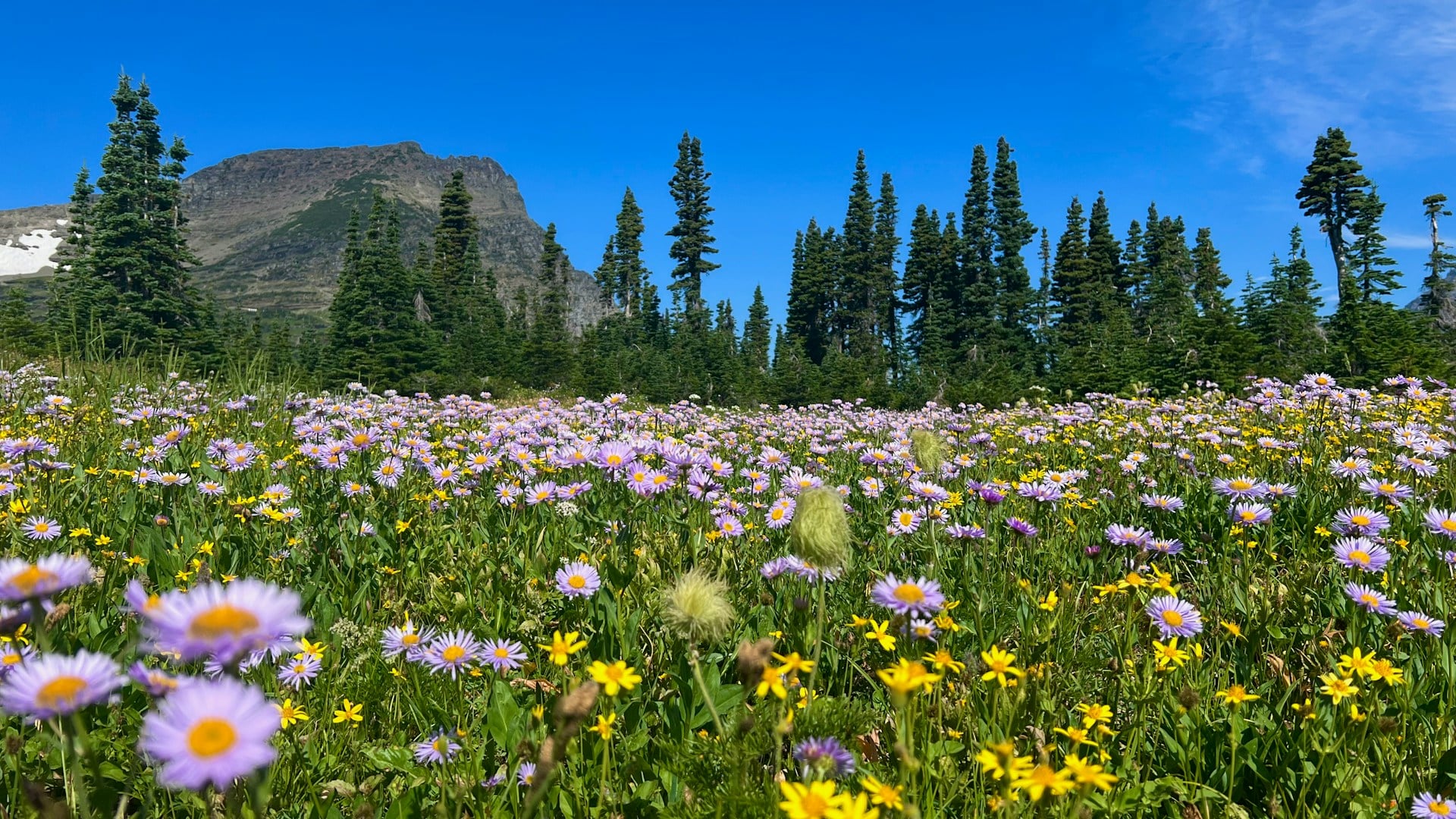
The Highline Trail(Opens in a new window) in Glacier National Park offers an unparalleled journey through the heart of the Montana wilderness. It’s a place where the vertiginous drama of the Rocky Mountains meets the vibrant flora of alpine meadows. From July through September, this trail is a riot of colors, with bear grass, glacier lilies, and Indian paintbrush smothering the landscape. Be on the lookout for the sight of mountain goats navigating steep cliffs or the rare but awe-inspiring sight of a grizzly in the distance. Spanning approximately 11.8 miles, the Highline Trail offers an up-close immersion into a variety of landscapes, from lush meadows to breathtaking overlooks of the park's valleys and glaciers. Come prepared with hydration(Opens in a new window), nutrition, and bear spray, ensuring a safe and enjoyable experience amidst the natural beauty of Glacier National Park.
7. Hill Country, TX: Willow City Loop

When to Go: March and April
Floral Highlights: Bluebonnets, Indian paintbrushes
In the heart of Texas Hill Country, the Willow City Loop(Opens in a new window) is arguably one of America’s most scenic drives—especially in springtime. During March and April, this area becomes a canvas painted with the state's most iconic blooms: the bluebonnet and Indian paintbrush. The Loop, while primarily a driving route, offers numerous opportunities to pull over and tread among the flowers, with several spots ideal for short hikes or leisurely walks. The bluebonnet fields, in particular, are a sight to behold, creating a sea of blue that stretches as far as the eye can see, punctuated by the fiery reds and oranges of Indian paintbrushes.
Making the Most of Your Wildflower Hike
Before you set off on your wildflower excursion, here are a few tips to enhance your experience:
- Check bloom reports: Wildflower seasons can vary year to year based on weather. Look up recent bloom reports or contact local park services for the best timing.
- Leave No Trace: Stay on designated trails to protect the wildflowers for everyone to enjoy.
- Pack essentials: Water, nutritio, a camera, and a field guide to wildflowers will enrich your hike.
- Be prepared for weather changes: Layers are your friend, as temperatures can fluctuate, especially in mountainous areas.
Ready to embark on a journey through America's most iconic wildflower hikes? These destinations will add some color into your life.
Featured image by Steve and Barb Sande(Opens in a new window)
Video player
Loading...